
From Thousands of Parts to Full Control: How Lergöken Manages Custom Production with Prosmart
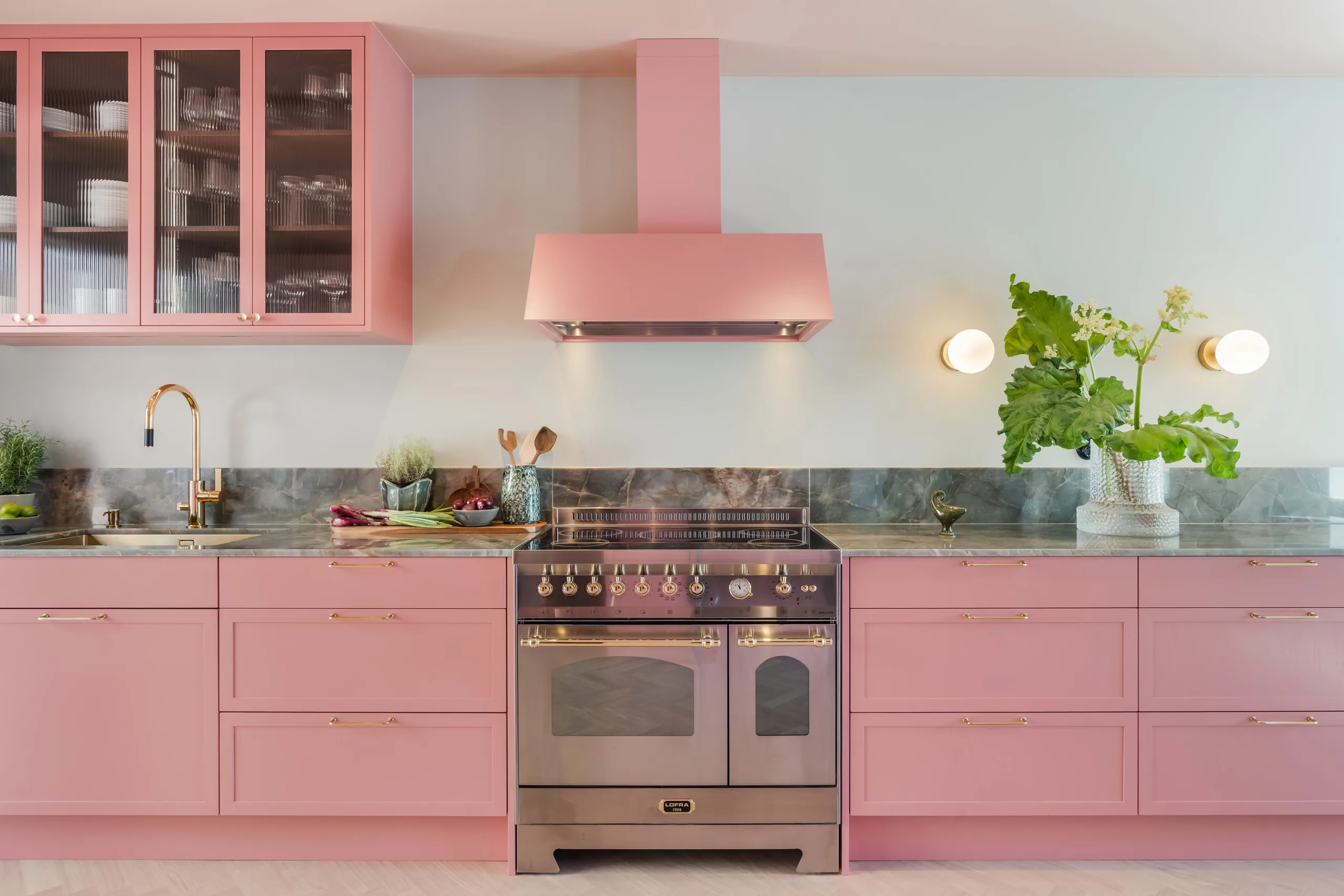
At Lergöken, no two kitchens are alike. The company designs, sells, and manufactures custom-fitted, built-in kitchens tailored to each customer’s preferences. The head office and showroom are located in Ängelholm, while manufacturing takes place in Munka Ljungby.
This level of customization places significant demands on production planning and control.
With around 20 kitchens in production simultaneously, this means managing up to 6,000 individual parts that must be manufactured, assembled, and end up in the right place. Since 2023, Lergöken has used Prosmart to manage the flow from orders and purchasing to manufacturing, delivery, and invoicing.
Every Kitchen is Made to Order
The customer journey begins in Lergöken’s showroom in Ängelholm or during a digital meeting. Based on floor plans, measurements, and the customer’s preferences, the kitchen is designed in 3D. The proposal is priced, adjusted, and refined until the customer is satisfied.
Once the order is finalized, the kitchen moves forward to order processing and production. This is where Prosmart comes into play.
Unlike more standardized manufacturing, Lergöken does not produce finished kitchens for inventory. What Lergöken considers semi-finished products—materials and components such as timber and hinges—are kept in stock, but each kitchen is only manufactured once a customer has ordered it. Most work is done in their own production facility, including using CNC machines, while surface treatment is performed externally.
A kitchen consists of roughly 300 parts that must be manufactured to the correct dimensions, handled in the right sequence, and ultimately reach the customer’s home. When several custom kitchens are at different stages of the production flow, the need for structure and traceability becomes critical. In Prosmart, Lergöken can go back and see which kitchen a customer ordered, what parts it consists of, and what color a specific component has. If a customer needs a new drawer front several years later, for example, the information remains available and the correct part can be manufactured again.
When Excel Was No Longer Sufficient
Before Lergöken began using Prosmart, much of the planning and information was held by individual employees or stored in Excel, while they used Swedish accounting system Fortnox. As the business grew, the need for a system tailored to manufacturing became increasingly clear.
The transition from a fully designed and sold kitchen to order and manufacturing became a bottleneck in particular. When each kitchen consists of hundreds of parts and each order can differ from the next, Lergöken needed a better way to manage production orders, purchasing, and planning.
Since the company was already using Fortnox and wanted to continue doing so, they contacted Fortnox and described what they needed to supplement. Fortnox recommended Prosmart.
They also looked at other ERP systems but settled on the combination of Prosmart’s support for manufacturing companies and the opportunity to work with a smaller provider that could adapt the system to their operations.
“What appealed to us was that Prosmart is a smaller provider willing to adapt. With larger systems, it may not be as easy to achieve that type of customization,” says Andreas Ebbesson, who is responsible for order and purchasing functions at Lergöken.
Better Overview from Order to Delivery
Today, Prosmart is used for orders, production orders, purchasing, and invoicing, among other functions. The system is integrated with Fortnox, which means information is automatically transferred to the financial system.
One of the biggest differences for Lergöken is the visability of production.
When an order is placed, Lergöken can plan production based on the delivery date and simultaneously access future production capacity. This allows the customer to receive a confirmed delivery date even when delivery is several months away. Similarly, purchasing can be planned based on when materials will actually be needed.
The overview also makes it possible to streamline production itself. When, for example, cabinet frames for several different kitchens are to be manufactured in the same material, the work can be coordinated across different customer orders.
The result, according to Andreas, is higher productivity and, above all, better control and traceability throughout the entire flow.
From Ten Errors per Month to Zero
For Lergöken, the ability to customize Prosmart to their own production has also delivered concrete results.
The company’s cabinets and frames are based on standard dimensions already entered into systems and machines. As long as the customer chooses standard dimensions, the risk of manual measurement errors is minimal since the dimensions are already programmed into the machines. But since the business model itself is built on customization, customers naturally sometimes want to change the width of a cabinet.
When that happens, all parts belonging to that cabinet must be adjusted.
Previously, it was easy for one of these changes to be missed. The human factor and familiarity with standard dimensions could simply cause problems. After a discussion with Prosmart, a simple customization was therefore developed: all dimensions that deviate from standard are marked with a green field on the production lists.
“On a tired Monday, it’s easy to miss. Now everything that deviates from standard is marked with a green field. It was something that cost a couple of thousand kronor to implement, but it has taken us from about ten such errors per month to zero.”
For Lergöken, the example is also confirmation of what made Prosmart interesting from the start: the ability to solve a business-specific problem together with the system provider without it becoming a massive development project.
A System to Grow With
When Lergöken first considered a new ERP, the investment was not obvious. After all, much of the business was already running on Excel and Fortnox, and the knowledge that existed among employees.
In hindsight, the picture is somewhat different:
“When everything relies on individual employees and Excel, you easily feel that you have control and that it works well. I remember thinking ‘I don’t need to invest in this’ even though the cost wasn’t particularly high. But once we took the step and made the investment, we wouldn’t have been anywhere near where we are today without it.”
Today, Lergöken sees more opportunities to make greater use of the system, including through functions the company has not yet fully begun working with. Collaboration with Prosmart also continues on an ongoing basis, with support and further development when new needs occasionally arise.
“Support works well and we get quick responses. Prosmart is skilled at further development and there are things in the system we don’t use yet. It’s a flexible ERPfor manufacturing companies.”
For Lergöken, where every finished product is unique, Prosmart has become a central part of daily operations. Or as Andreas himself summarizes it:
“I work in Prosmart eight hours a day. It’s the first thing I open in the morning and the last thing I close before I go home.”

